Pharmacogenomic Testing in Psychiatry: What It Can and Can’t Tell Us
A clinician-facing overview of scope, evidence strength, limitations, and medical necessity
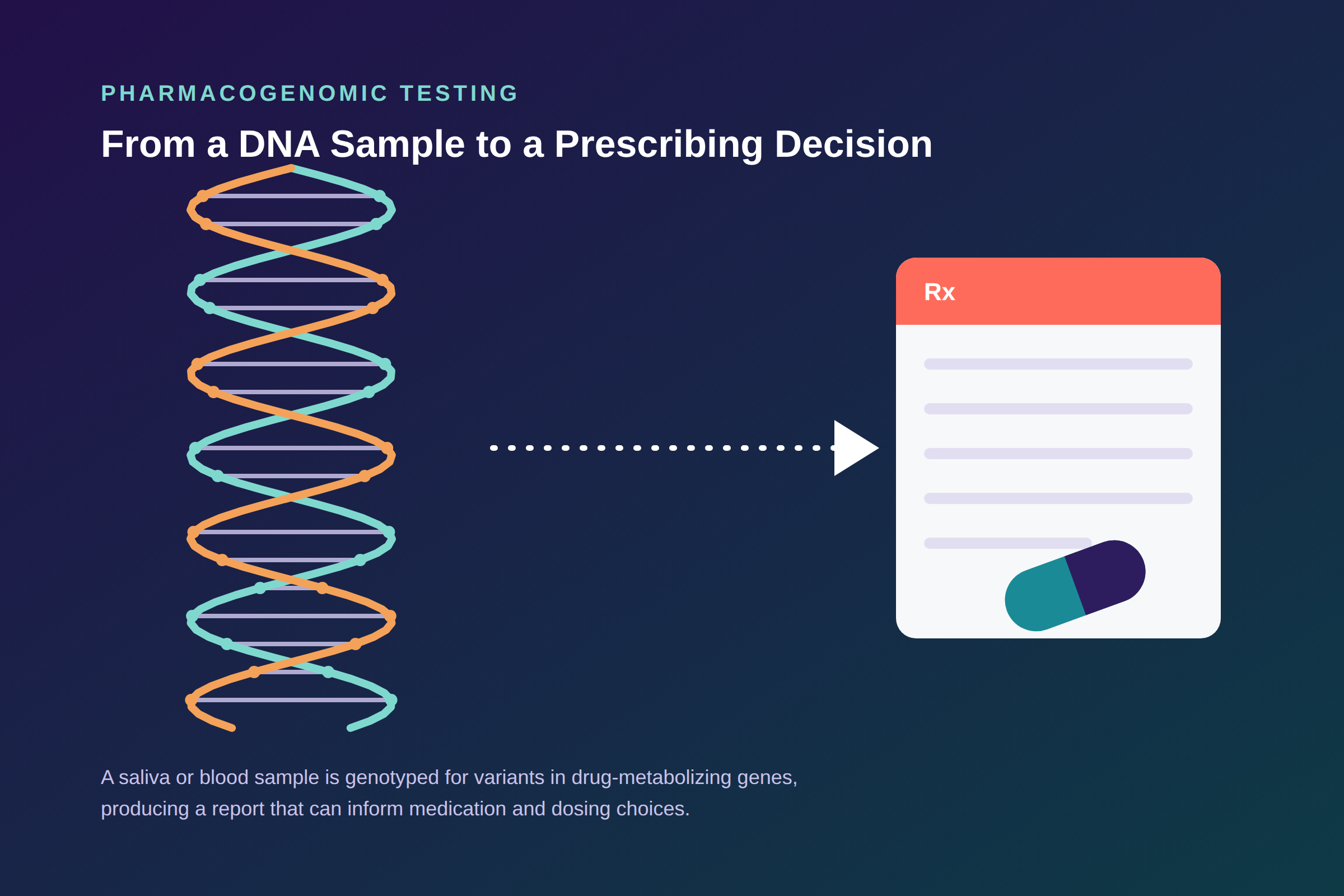
Pharmacogenomic (PGx) testing analyzes a patient’s genetic variants to predict how they might metabolize or respond to specific medications. In psychiatry, where trial-and-error prescribing is the norm and patients often cycle through several agents before finding one that works, the appeal is obvious: a cheek swab that shortens the search. The reality is more nuanced. Some of what PGx testing reveals is well-established and clinically actionable; other claims made by commercial testing panels outrun the evidence considerably.

Which Psychiatric Medications Does Testing Address?
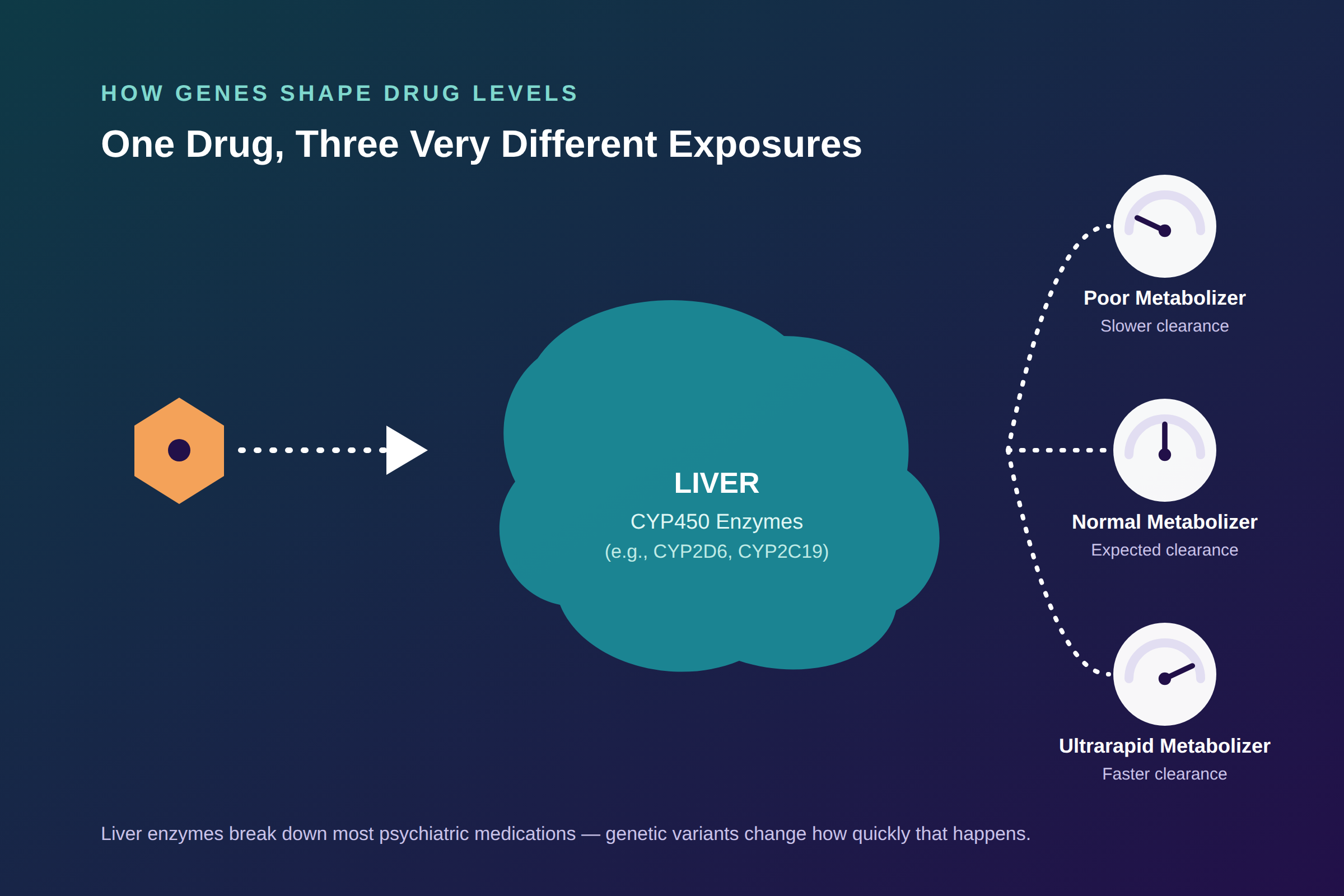
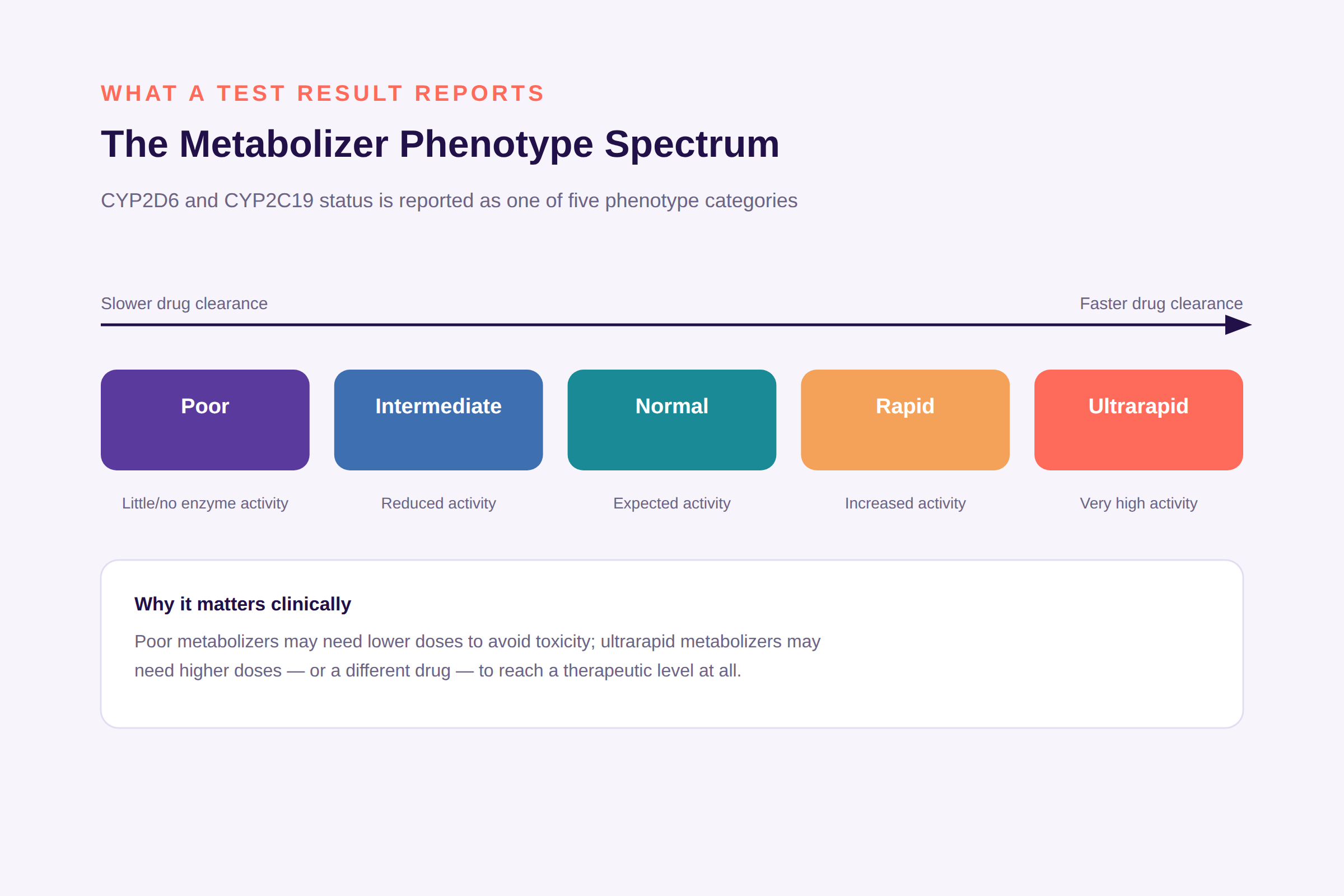
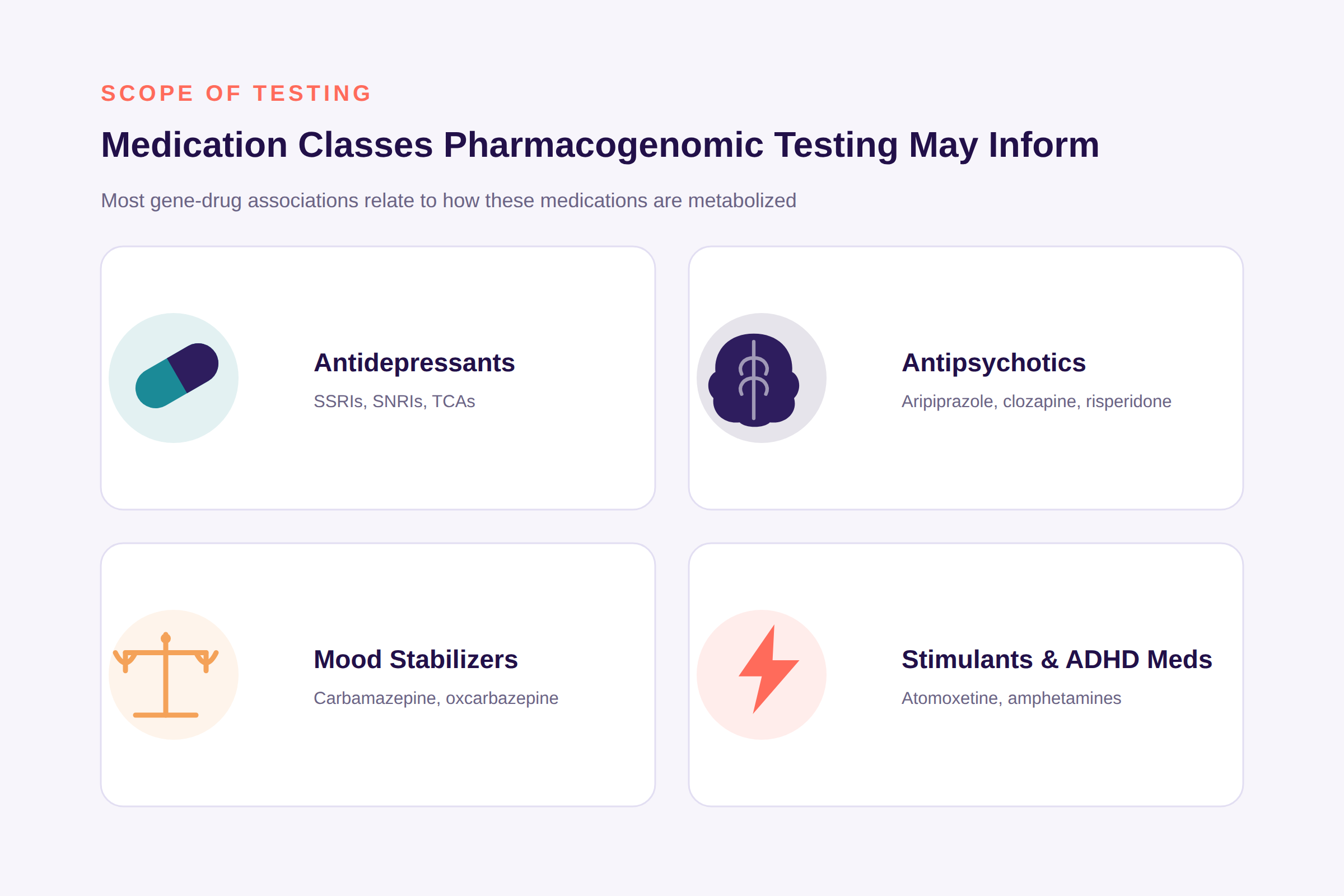
Most psychiatric PGx testing centers on cytochrome P450 enzymes — primarily CYP2D6 and CYP2C19 — that metabolize the majority of antidepressants and many antipsychotics. On the antidepressant side, the FDA’s Table of Pharmacogenetic Associations flags citalopram and escitalopram (CYP2C19 poor or ultrarapid metabolizers, with a recommended maximum citalopram dose of 20 mg in poor metabolizers due to QT-prolongation risk), paroxetine and venlafaxine (CYP2D6), vortioxetine (CYP2D6, with a 10 mg maximum in poor metabolizers), and the older tricyclic antidepressants — amitriptyline, nortriptyline, imipramine, desipramine, and others — which are CYP2D6 substrates with a narrow therapeutic index, making metabolizer status especially relevant to both toxicity and efficacy.
Among antipsychotics, aripiprazole, brexpiprazole, clozapine, iloperidone, and risperidone all carry CYP2D6-related labeling, generally around dose adjustment in poor metabolizers. Two are more stringent: iloperidone requires a 50% dose reduction in poor metabolizers due to QT-prolongation risk, and thioridazine is contraindicated outright in CYP2D6 poor metabolizers. Pimozide carries specific dosing caps tied to metabolizer status as well. Stimulants and non-stimulants used for ADHD are also represented: atomoxetine (CYP2D6) and amphetamine formulations carry labeling regarding altered concentrations and adverse-reaction risk in poor metabolizers.
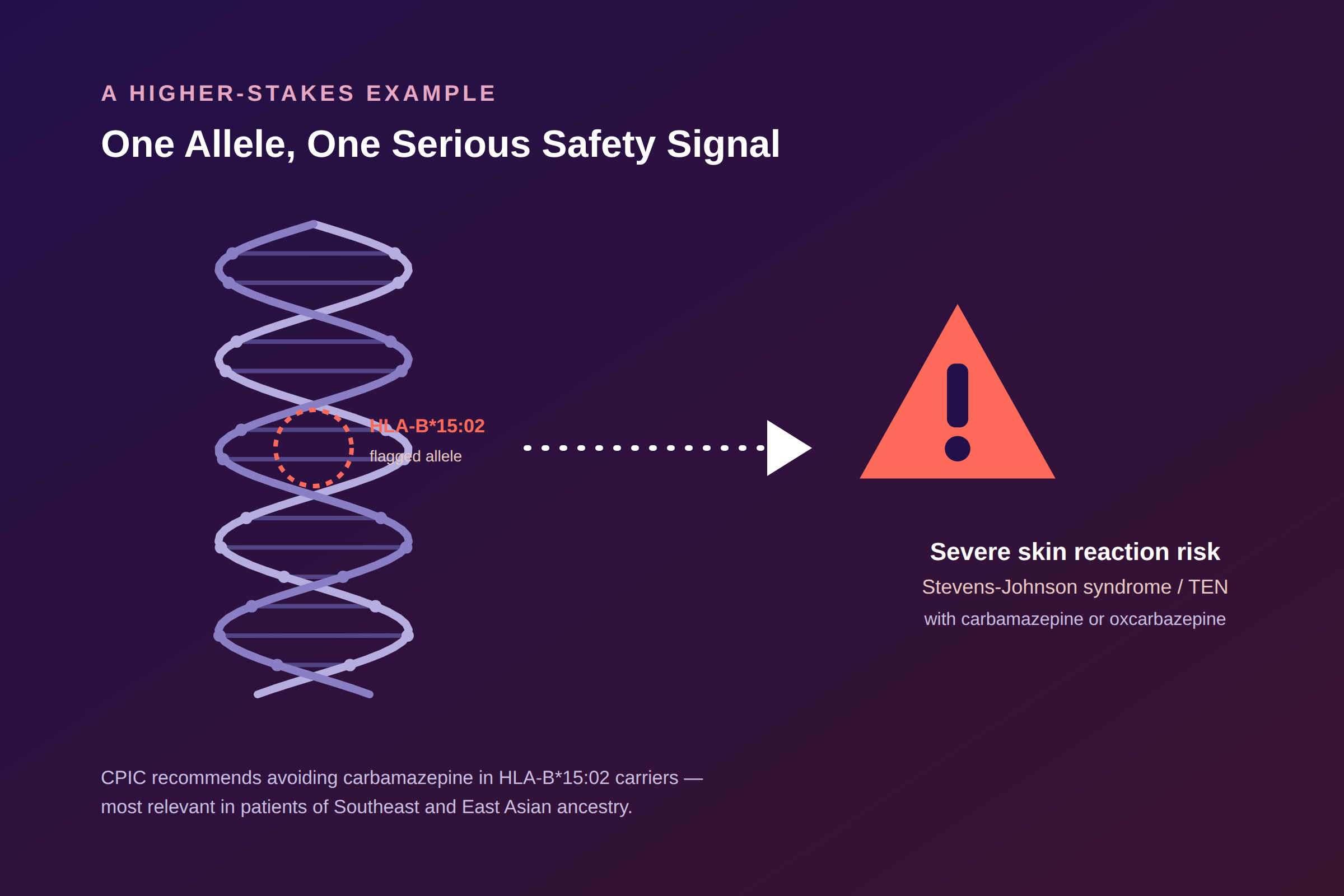
For mood stabilizers, the most consequential pharmacogenomic marker isn’t a metabolic enzyme at all but an immune one: HLA-B*15:02 and HLA-A*31:01. Carriers of HLA-B*15:02 — a variant far more common in patients of Han Chinese, Southeast Asian, and South Asian ancestry — face a sharply elevated risk of Stevens-Johnson syndrome and toxic epidermal necrolysis with carbamazepine, and CPIC guidance recommends avoiding the drug in carriers altogether. HLA-A*31:01, more broadly distributed across populations, is associated with a range of hypersensitivity reactions to carbamazepine and informs a similar risk discussion for oxcarbazepine.
How Strong Is This Knowledge, Really?
The strength of evidence varies enormously depending on what’s being tested — and this is where a lot of confusion, and marketing overreach, occurs.
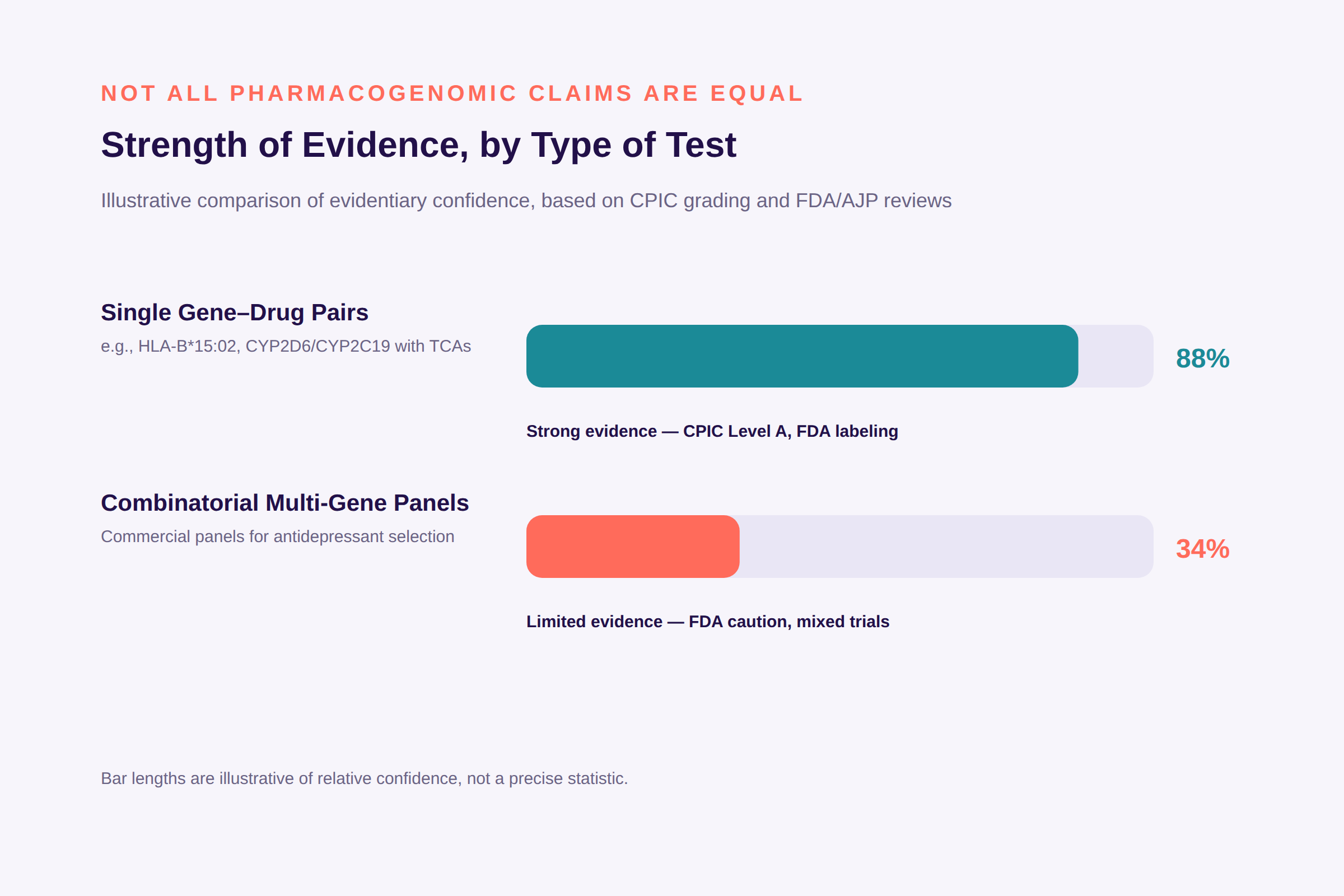
Single gene-drug pairs with a clear pharmacokinetic mechanism — CYP2D6 and tricyclics, CYP2C19 and citalopram/escitalopram, HLA-B*15:02 and carbamazepine — rest on solid ground. These associations are graded at the highest confidence levels by the Clinical Pharmacogenetics Implementation Consortium (CPIC), appear in FDA drug labeling, and have decades of pharmacokinetic and case-control data behind them. Knowing a patient is a CYP2D6 poor metabolizer genuinely predicts higher drug exposure at a standard dose, and knowing a patient carries HLA-B*15:02 genuinely predicts elevated risk of a severe reaction to carbamazepine.
The picture is far weaker for the multi-gene “combinatorial” decision-support panels marketed directly to psychiatrists and patients (branded products that combine dozens of genes into a single “green light/yellow light/red light” report for antidepressant selection). A 2024 evidence review in the American Journal of Psychiatry examined eleven clinical trials of these combinatorial tools published between 2017 and 2022 and found the results underwhelming: only three of eleven trials showed a benefit on the primary outcome, five found no significant effect at all, and none of the studies used a fully blinded design — a serious limitation given how easily expectation effects can influence depression ratings. The reviewers concluded that this newer evidence “does not alter” the FDA’s 2018 position that current combinatorial PGx tools lack sufficient evidence to guide antidepressant selection in major depressive disorder. In short: the biology behind individual gene-drug pairs is sound, but the proprietary algorithms that bundle many genes into a single prescribing recommendation have not yet proven themselves in properly controlled trials.
Limitations Worth Knowing
Even where the evidence is strongest, PGx testing has real boundaries. Genetics explains only part of the variability in drug response — non-genetic factors like smoking (a potent inducer of CYP1A2, relevant to clozapine and olanzapine dosing), other medications competing for the same enzyme (phenoconversion, where a drug interaction makes a genetically normal metabolizer behave like a poor one), diet, adherence, age, and hepatic or renal function all matter just as much or more. Most available tests also focus on pharmacokinetics — how a drug is processed — rather than pharmacodynamics, or how the brain actually responds to it, which is arguably the more clinically important and far less well-mapped question in psychiatry. Testing also doesn’t eliminate the need for clinical judgment, careful titration, and monitoring; a favorable genotype doesn’t guarantee response, and an unfavorable one doesn’t guarantee failure. Finally, access and cost remain uneven — insurance coverage varies widely, and results can create a false sense of precision if clinicians or patients treat a report as more deterministic than it is.
Is It Medically Necessary for Psychiatrists to Order?
There’s no single answer, because “pharmacogenomic testing” isn’t one test. Routine, universal PGx testing before every psychiatric prescription isn’t supported by current evidence, and major professional guidance — echoing the FDA’s position — stops well short of recommending it as standard practice, particularly for combinatorial panels used to pick an antidepressant. The American Academy of Child and Adolescent Psychiatry has taken a similarly cautious stance for children and adolescents, citing limited pediatric-specific evidence.
That said, “not routinely necessary” isn’t the same as “never indicated.” Testing looks genuinely warranted, or close to it, in narrower circumstances: before starting carbamazepine or oxcarbazepine in a patient of Asian ancestry, where HLA-B*15:02 status carries an FDA boxed warning; when a patient has had an unexplained severe adverse reaction or unusual lack of response suggestive of atypical metabolism; when prescribing a narrow-therapeutic-index drug like a tricyclic antidepressant; or in complex, treatment-resistant cases with extensive polypharmacy, where phenoconversion and drug interactions are hard to reason through by hand. In those situations, targeted single gene-drug testing is a reasonable and evidence-supported clinical tool — not a replacement for psychiatric assessment, but a genuine adjunct to it.
References
American Academy of Child and Adolescent Psychiatry. (2020). Clinical use of pharmacogenetic tests in prescribing psychotropic medications for children and adolescents [Policy statement]. https://www.aacap.org/aacap/Policy_Statements/2020/Clinical-Use-Pharmacogenetic-Tests-Prescribing-Psychotropic-Medications-for-Children-Adolescents.aspx
Baum, M. L., Widge, A. S., Carpenter, L. L., McDonald, W. M., Cohen, B. M., & Nemeroff, C. B. (2024). Pharmacogenomic clinical support tools for the treatment of depression. American Journal of Psychiatry, 181(7), 591–607. https://doi.org/10.1176/appi.ajp.20230657
Clinical Pharmacogenetics Implementation Consortium. (2019). FDA and pharmacogenomics. https://cpicpgx.org/wp-content/uploads/2019/08/fda-and-pgen-2019.pdf
Phillips, E. J., Sukasem, C., Whirl-Carrillo, M., Müller, D. J., Dunnenberger, H. M., Chantratita, W., Goldspiel, B., Chen, Y.-T., Carleton, B. C., George, A. L., Jr., Mushiroda, T., Klein, T., Gammal, R. S., & Pirmohamed, M. (2018). Clinical Pharmacogenetics Implementation Consortium guideline for HLA genotype and use of carbamazepine and oxcarbazepine: 2017 update. Clinical Pharmacology & Therapeutics, 103(4), 574–581. https://doi.org/10.1002/cpt.1004
Rosenblat, J. D., Goldberg, J. F., & McIntyre, R. S. (2019). Consumer warning for genetic tests claiming to predict response to medications: Implications for psychiatry. American Journal of Psychiatry, 176(5), 412–413. https://doi.org/10.1176/appi.ajp.2019.18121359
U.S. Food and Drug Administration. (n.d.).Table of pharmacogenetic associations. U.S. Department of Health and Human Services. Retrieved September 20, 2026, from https://www.fda.gov/medical-devices/precision-m